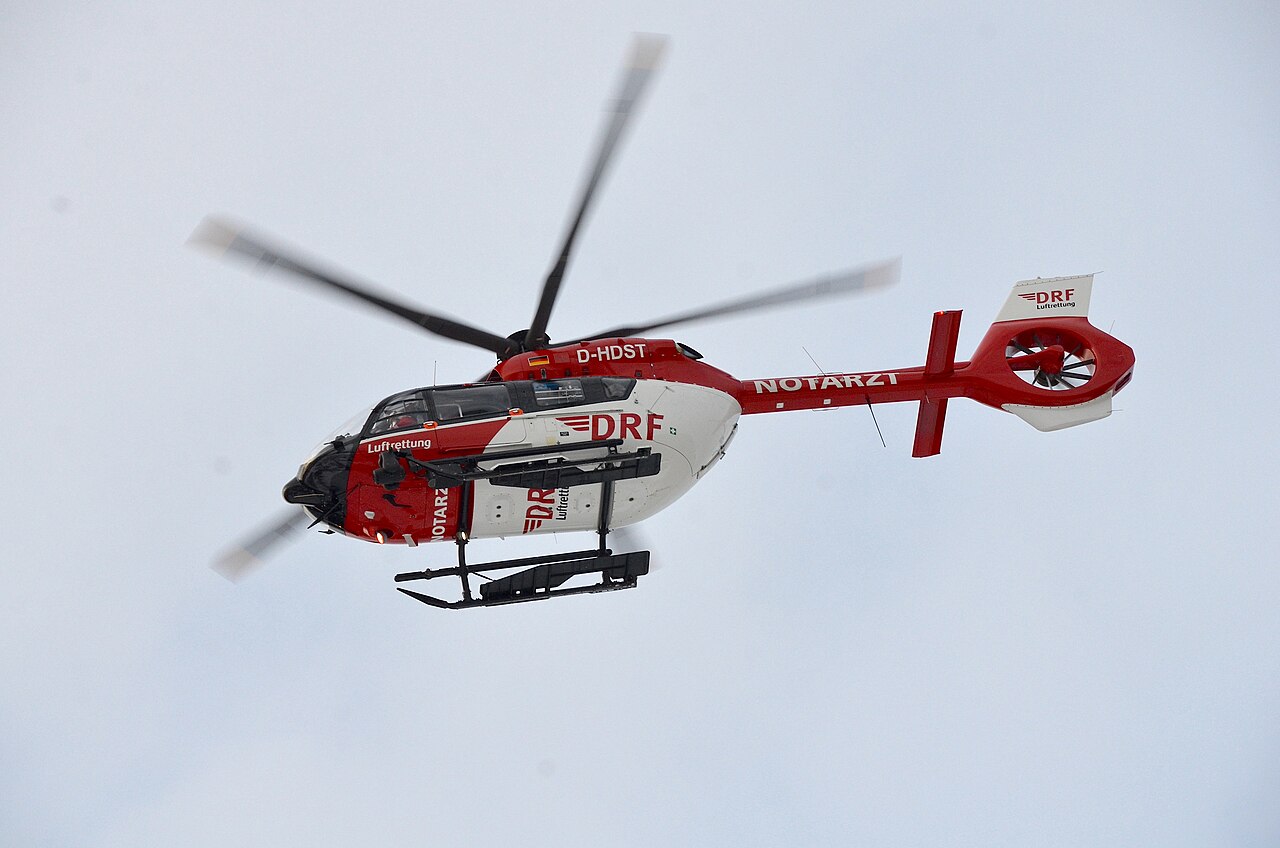

In the pulsing, arid heart of Australia, where the red earth meets the infinite blue of the sky, CareFlight's Airbus H135 operates as a technological lifeline. In a territory spanning over 1.3 million square kilometers, the challenge is not just medical, but purely aeronautical: managing HEMS (Helicopter Emergency Medical Services) flights in extreme 'Hot and High' conditions.
✈️ Quick Facts & Performance
Manufacturer: Airbus Helicopters
Model: H135 (T3/P3)
Propulsion: 2x Safran Arrius 2B2 Plus / P&WC PW206B3
Cruise Speed: 136 kts (252 km/h)
Service Ceiling: 20,000 ft
Maximum Range: 633 km (342 nm)
History, Birth, and Design Philosophy
The Airbus H135, an evolution of the famous EC135, was born from a philosophy that prioritizes operational safety and versatility in confined environments. CareFlight Australia chose this platform for its legendary reliability and the Fenestron shrouded tail rotor design, which ensures unparalleled safety during ground operations in unprepared Outback areas. The transition to the H135 T3/P3 models introduced significant improvements in high-altitude and high-temperature performance—critical factors when operating in the Northern Territory, where ground temperatures regularly exceed 40°C, drastically affecting air density and, consequently, lift.
Aeronautical Engineering, Engines, and Aerodynamics
From an engineering perspective, the H135 is a masterpiece of composite materials and advanced aerodynamics. The bearingless main rotor reduces maintenance and increases control responsiveness. The Safran Arrius 2B2 Plus engines offer an exceptional power reserve, essential for OEI (One Engine Inoperative) procedures. In Australia, engine thermal management is a priority: air filtration systems must protect turbines from the fine red desert dust, while the FADEC (Full Authority Digital Engine Control) system constantly optimizes fuel consumption and flight parameters, allowing pilots to focus on the rescue mission.
Life in the Cockpit: Operating Procedures and Pilots
Entering the cockpit of a CareFlight H135 means interfacing with the Helionix avionics suite. This three-screen system drastically reduces pilot workload by integrating digital maps, synthetic vision, and traffic management. For pilots operating in the Northern Territory, the main challenge is navigating in areas devoid of visual references and with limited radar coverage. This is where integration with remote solar-powered tracking stations comes in: these infrastructures allow the aircraft to constantly transmit its position via ADS-B and satellite, ensuring that the Darwin operations center always knows the helicopter's location, even in the remotest gorges of Kakadu National Park. The use of Night Vision Goggles (NVG) is the standard for night missions, transforming the total darkness of the desert into a safe operating environment.
Real Missions, Famous Routes, and Operational Challenges
CareFlight's routes do not follow standard air corridors; they wind through isolated Aboriginal communities, cattle stations as large as European nations, and mining sites. A typical mission might involve a takeoff from Darwin, refueling on a remote dirt strip, and a recovery in a canyon. The greatest operational challenge remains 'Density Altitude': with extreme heat, the helicopter 'feels' like it is flying at a much higher altitude than it actually is, requiring precise weight and fuel management. Every gram counts when transporting a critical patient, a doctor, a nurse, and resuscitation equipment over distances that test the aircraft's endurance.
| Technical Specification | Official Data |
|---|---|
| Main Rotor Diameter | 10.40 m |
| Total Length | 12.16 m |
| MTOW (Max Take-Off Weight) | 2,980 kg |
| Standard Fuel | 710 liters |
| Typical HEMS Crew | 1 Pilot + 2 Medical Staff |
| Cargo Hook Capacity | 1,200 kg |
The future of the H135 in Australia looks solid, with continuous software updates for Helionix and the introduction of even more efficient rotor blades. This aircraft remains the pillar of aerial rescue, proving that European engineering excellence can tame one of the most hostile and fascinating environments on the planet.