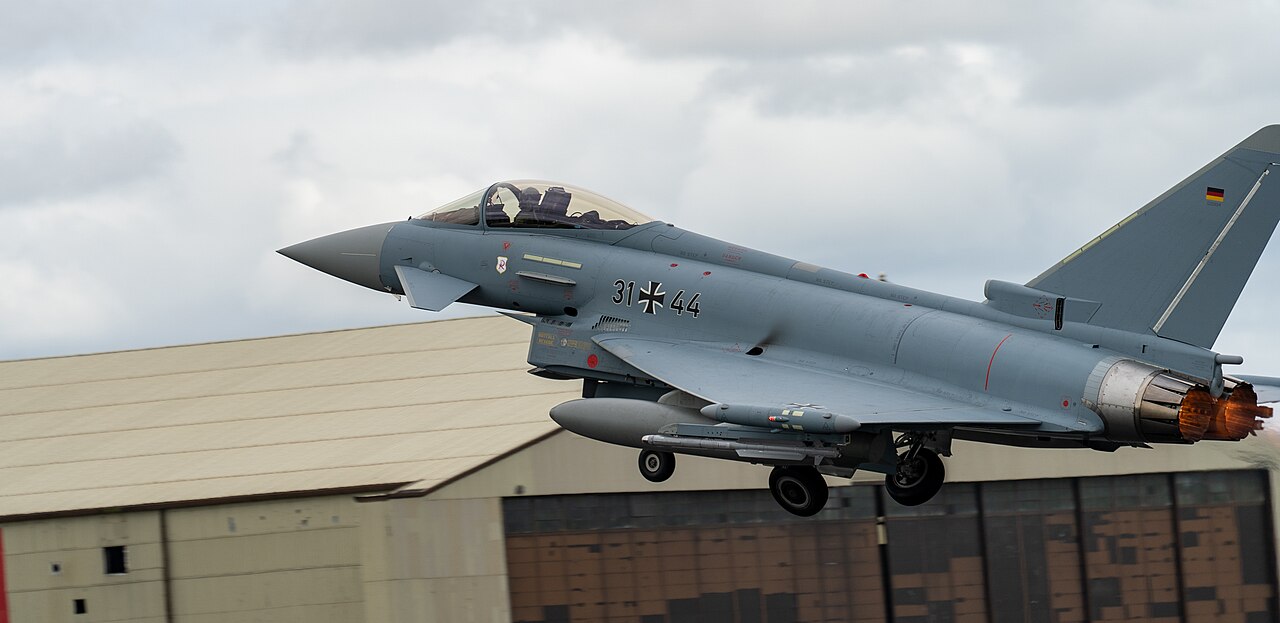
The roar of EJ200 engines piercing the silence of the airbase is the unmistakable signal of a Quick Reaction Alert (QRA) mission in progress. The Eurofighter Typhoon is not just an aircraft; it is the pinnacle of European aeronautical engineering, a fighter designed to dominate the skies through a philosophy of controlled intrinsic instability.
✈️ Scheda Tecnica & Prestazioni
History, Origins and Design Philosophy
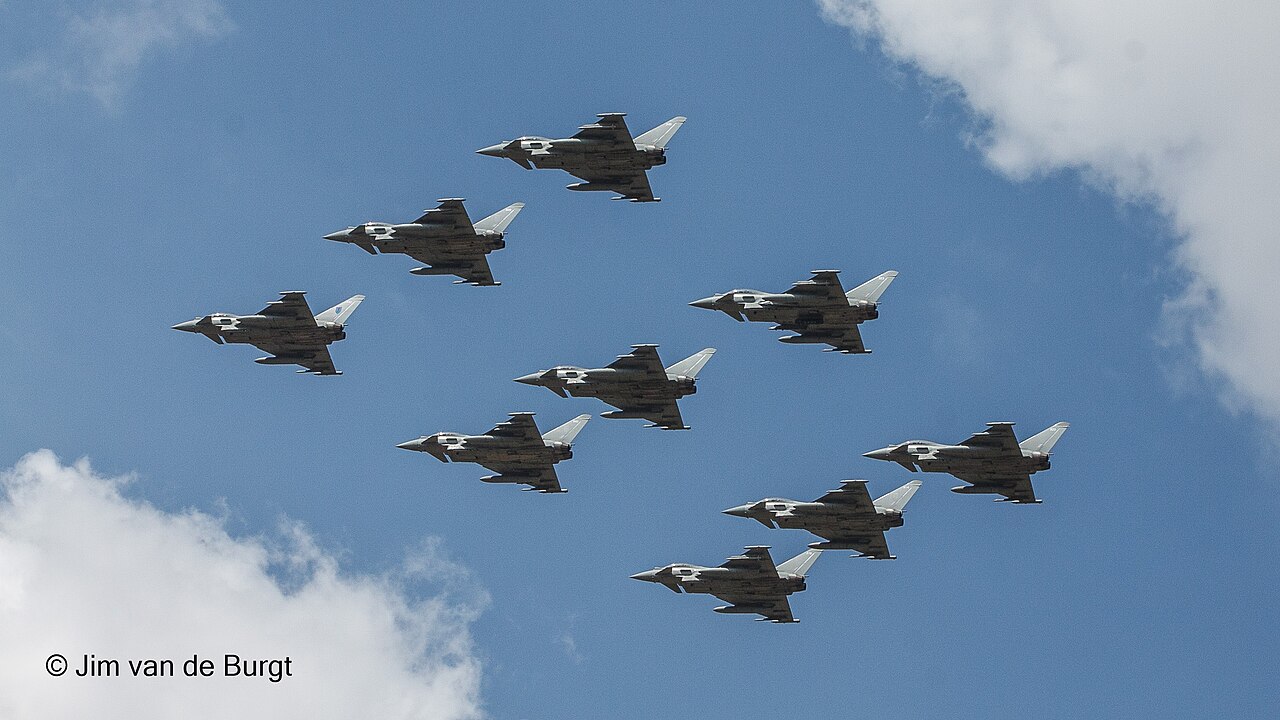
Born from the collaboration between Italy, the UK, Germany, and Spain, the Typhoon was conceived to overcome Eastern Bloc threats, focusing on thrust-to-weight ratio and supersonic agility. The choice of canard wings coupled with a delta wing allowed for an aircraft that, while aerodynamically unstable, is extremely responsive thanks to the quadruple redundant Fly-By-Wire system.
Aeronautical Engineering, Engines and Aerodynamics
The core of the Typhoon lies in the thrust of the EJ200 engines, capable of exceeding 90kN with afterburner. The integration between the carbon fiber airframe and the digital control system allows the pilot to perform high-G maneuvers that would destroy a conventional aircraft. Instability is the strength: the onboard computer constantly corrects the attitude, allowing for instantaneous maneuverability during dogfights.
Cockpit Life: Operational Procedures and Pilots
Entering the cockpit means immersing oneself in an environment where HOTAS (Hands-On-Throttle-And-Stick) ergonomics are pushed to the limit. During an interception mission, the pilot must manage high information saturation, relying on Helmet Mounted Symbology System (HMSS) to target short-range air-to-air missiles with a simple head movement.
Real Missions, Famous Routes and Operational Challenges
From patrols over Baltic skies to national air defense missions, the Typhoon demonstrates its readiness daily. QRA scramble takeoffs require the aircraft to be airborne in minutes, a challenge that tests not only the pilot but the entire logistics and maintenance chain.
| Technical Feature | Official Data |
|---|---|
| Wingspan | 10.95 m |
| Length | 15.96 m |
| MTOW | 23,500 kg |
| Unitary Thrust | 90 kN |
| Crew | 1 (or 2) |
The Typhoon's legacy is set to last for decades. With continuous avionics and armament upgrades, this fighter remains the pillar of European air sovereignty, ready to evolve toward the challenges of the sixth generation.