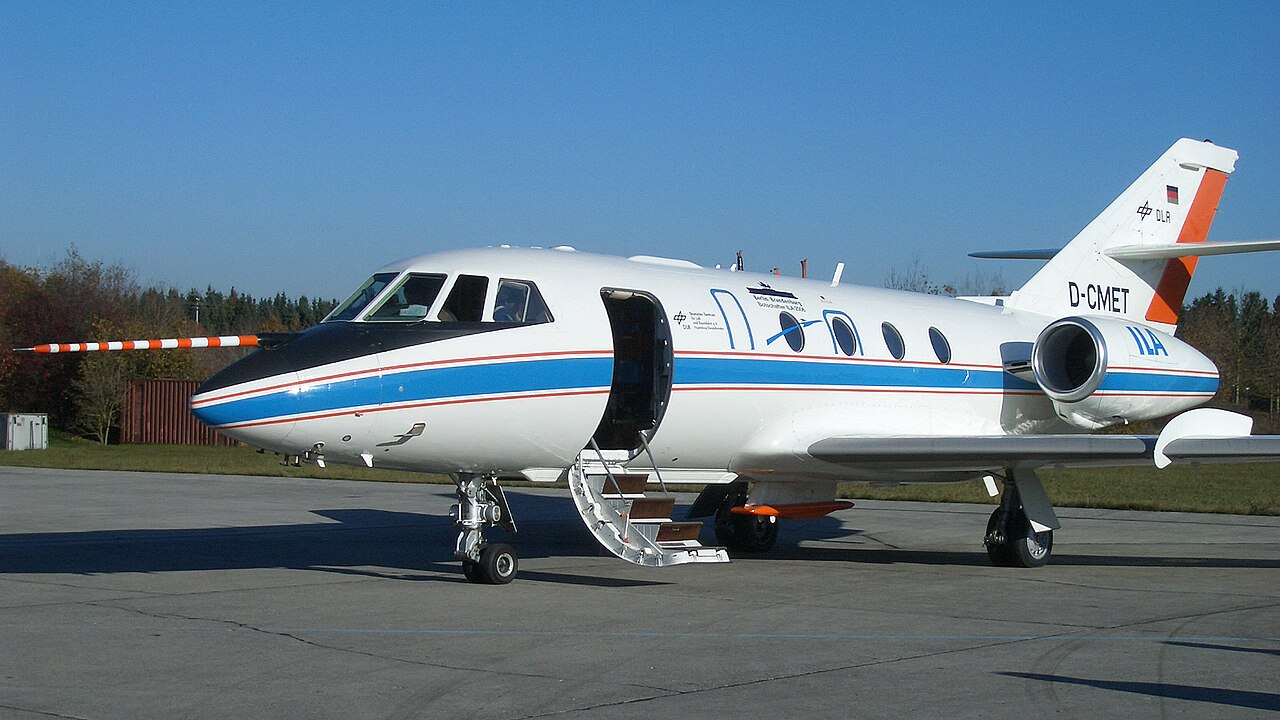
In the thin silence of the stratosphere, over 43,000 feet high, an unmistakable wing profile cuts through the frigid air over the North Atlantic. This is no ordinary executive jet, but the Gulfstream G550 HALO (High Altitude and Long Range Research Aircraft), an aeronautical engineering marvel transformed into a cutting-edge scientific platform for studying 'atmospheric rivers.'
✈️ Quick Facts & Performance
- Manufacturer: Gulfstream Aerospace
- Model: G550 HALO (DLR Modified)
- Propulsion: 2x Rolls-Royce BR710 C4-11
- Speed: Mach 0.80 (Scientific Cruise)
- Service Ceiling: 51,000 ft (FL510)
- Range: 8,000+ nm (12,500 km)
History, Origin, and Design Philosophy
The HALO project was born from the German Aerospace Center's (DLR) need for a carrier capable of operating in extreme flight regimes where air density is minimal and endurance is vital. Based on the Gulfstream G550 airframe, one of the world's highest-performing business jets, HALO underwent radical structural modifications. The philosophy behind this aircraft is versatility: converting a jet designed for high-level intercontinental transport into a laboratory capable of carrying three tons of scientific instrumentation while maintaining the ability to fly for over 10 consecutive hours.
Aeronautical Engineering, Engines, and Aerodynamics
The beating heart of HALO is its two Rolls-Royce BR710 C4-11 engines, each capable of generating over 15,000 pounds of thrust. These powerplants are optimized for high-altitude efficiency, allowing the aircraft to maintain high cruise speeds (Mach 0.80-0.85) while reducing specific fuel consumption. The G550's aerodynamics were modified with the addition of numerous underwing hardpoints and fuselage apertures for LIDAR sensors and meteorological radars. The swept-wing structure, combined with iconic winglets, ensures exceptional stability even during turbulence encountered at the edges of jet streams.
Life in the Cockpit: Operating Procedures and Pilots
Flying HALO is no ordinary task. At FL450 (Flight Level 450), the maneuvering margins between stall speed and maximum speed (the 'coffin corner') are narrow. Pilots must manage complex flight profiles, often following non-standard routes to intercept atmospheric rivers. The Honeywell Primus Epic avionics are integrated with advanced telemetry systems, allowing the crew to monitor ADS-B data in real-time for traffic separation and millimeter precision on scientific tracks. Fuel management is critical: every kilogram burned affects the aircraft's center of gravity, especially with asymmetric external instrument loads.
Real Missions, Famous Routes, and Operational Challenges
Atlantic missions are among the most demanding. Flying between Canada and Europe, HALO maps 'atmospheric rivers'—massive corridors of water vapor transporting moisture from the tropics to mid-latitudes. During these operations, the aircraft releases 'dropsondes' that transmit pressure, temperature, and humidity data as they descend toward the ocean. The operational challenge lies in coordination with oceanic air traffic control, as HALO often operates above standard commercial routes, requiring special permits for rapid altitude variations needed for data collection.
| Technical Specification | Official Data |
|---|---|
| Wingspan | 28.5 m |
| Length | 29.4 m |
| MTOW (Max Takeoff Weight) | 41,277 kg |
| Unit Thrust (SL) | 15,385 lbf |
| Maximum Fuel | 18,733 kg |
| Crew | 2 Pilots + 10-12 Scientists |
HALO's legacy continues to grow. Every flight hour accumulated over the Atlantic contributes to more precise climate models, protecting coastal populations from extreme weather events. This aircraft represents the pinnacle of symbiosis between business aviation and global scientific research.