
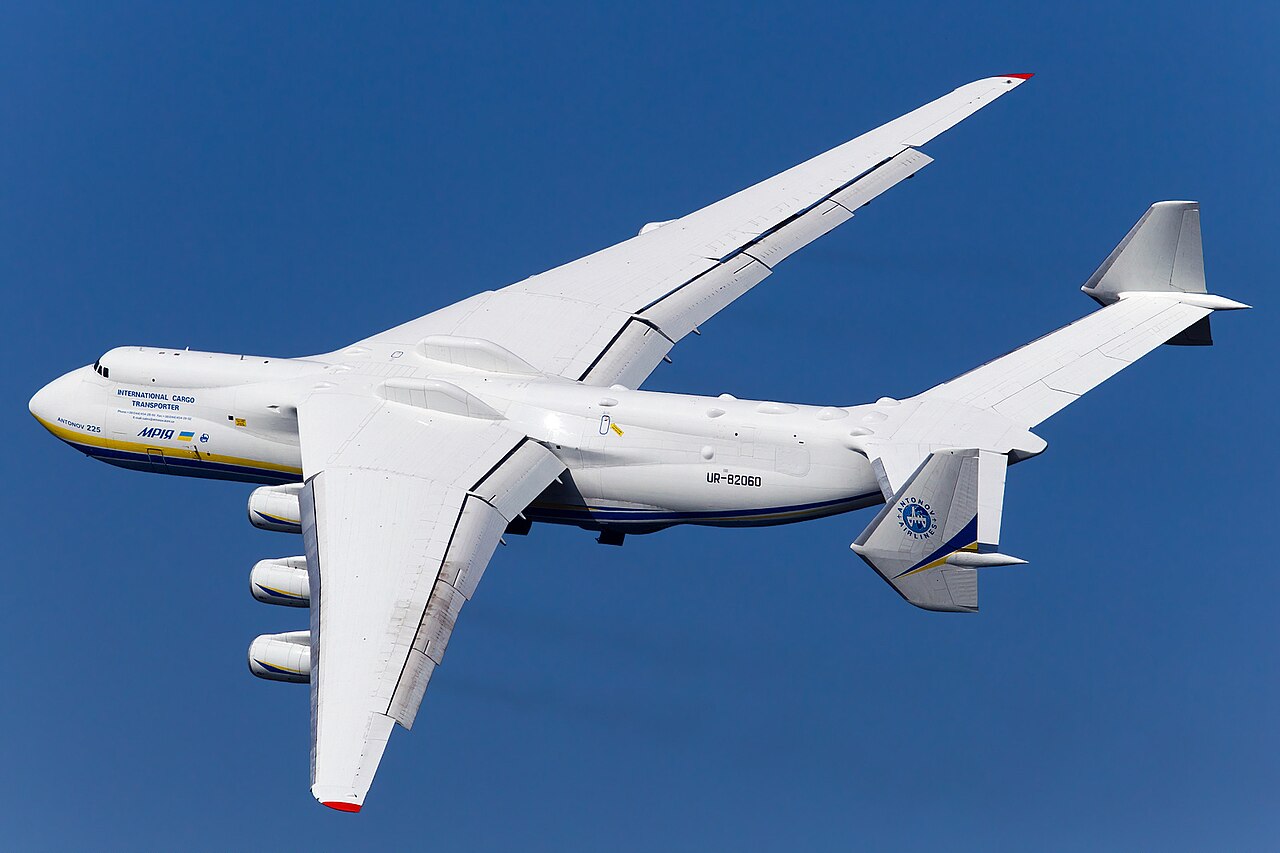
The Antonov An-225 Mriya was not just an aircraft; it was a triumph of applied physics, a flying cathedral capable of lifting weights that aeronautical logic once deemed impossible.
✈️ Technical Specifications & Performance
History, Birth and Design Philosophy
Born in the 1980s to carry the Buran shuttle, the Mriya (Dream) is the extreme evolution of the An-124. The need to carry oversized external loads dictated an enlarged fuselage and a twin-tail empennage to manage aerodynamic turbulence.
Aeronautical Engineering, Engines and Aerodynamics
The beating heart consists of six Lotarev D-18T turbofans, each capable of 230 kN of thrust. The wing, with high aspect ratio, is a masterpiece of structural engineering, designed to flex under extreme loads.
Cockpit Life: Operational Procedures
Flying the Mriya required perfect synergy between the pilot, co-pilot, flight engineer, and navigator. Weight and balance management were critical procedures, with checklists covering every possible emergency scenario.
Real Missions and Operational Challenges
From global humanitarian missions to transporting industrial turbines, the Mriya operated in airports where runway width was barely sufficient for its 32-wheel landing gear.
| Technical Feature | Official Data |
|---|---|
| Wingspan | 88.4 meters |
| MTOW | 640 tons |
| Crew | 6 persons |
The Mriya remains an eternal symbol of what aeronautical engineering can achieve when vision exceeds conventional limits.