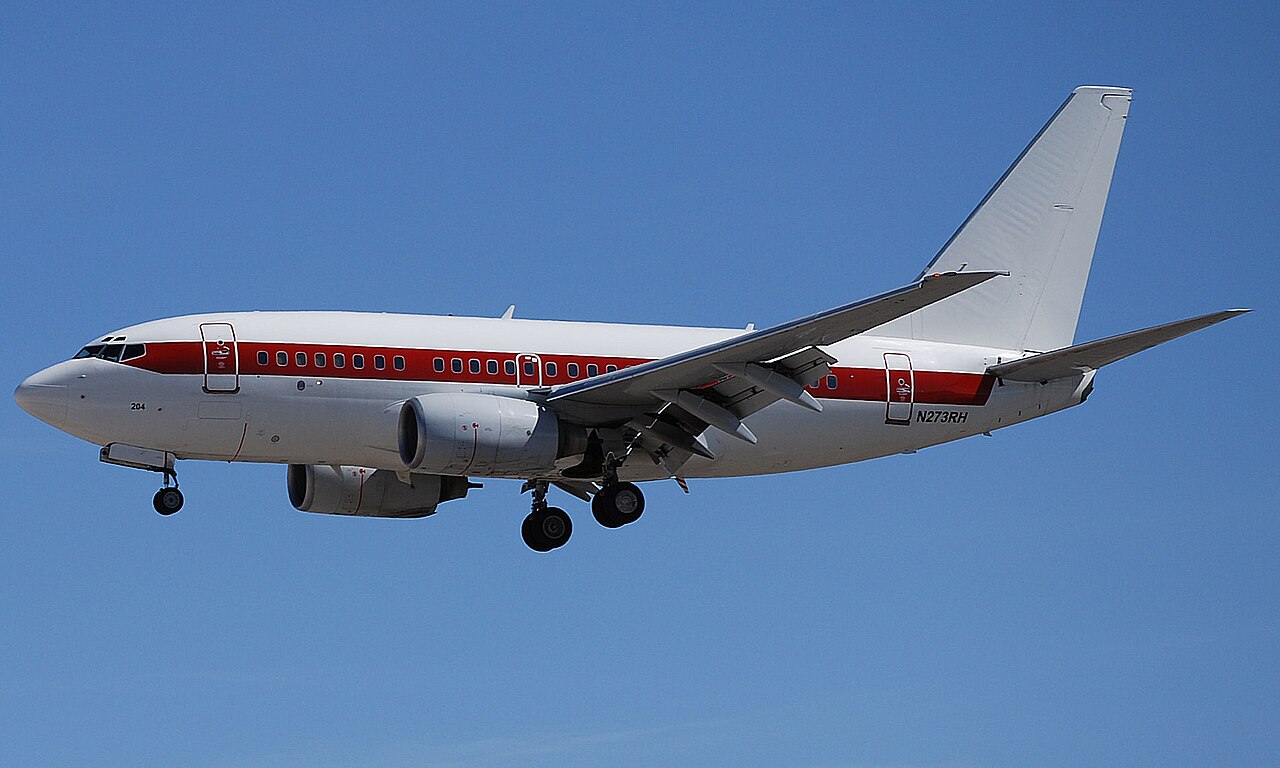
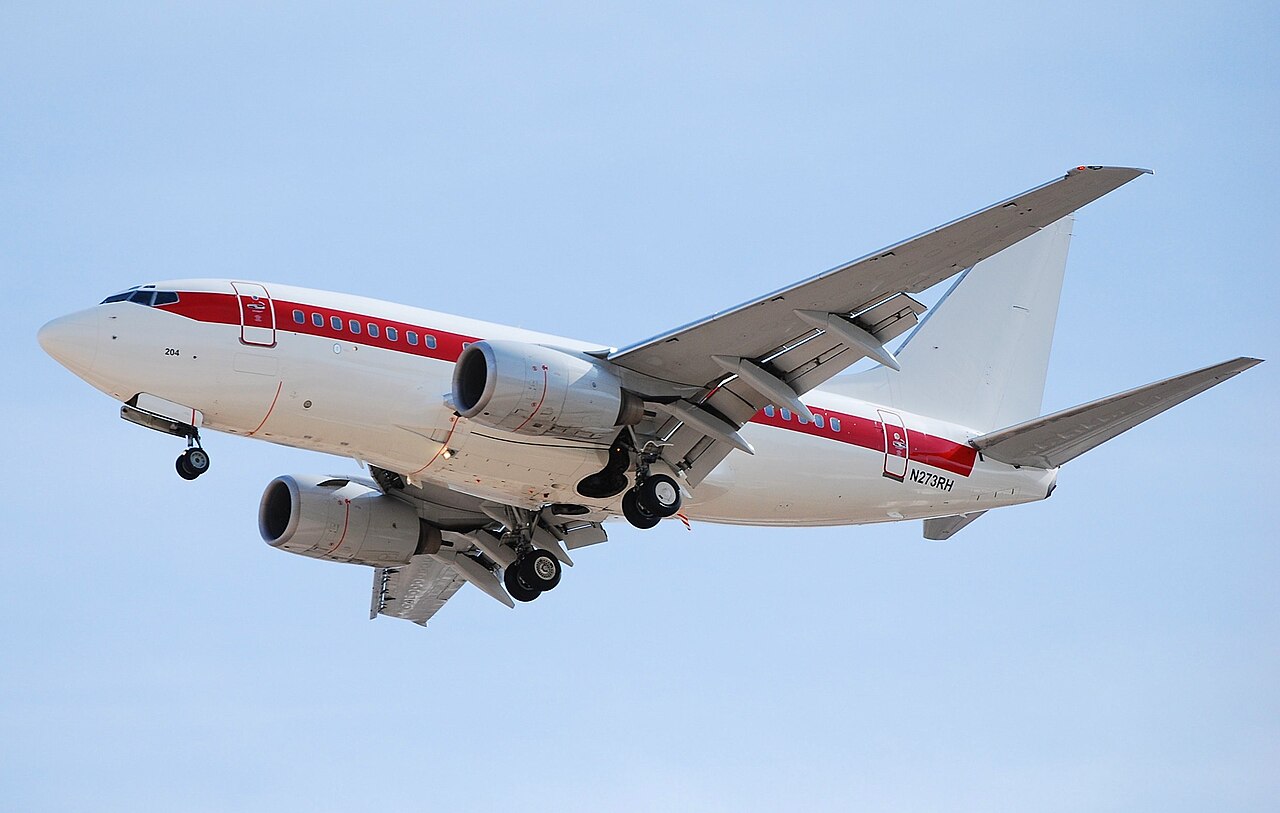
As dawn paints the runways of Las Vegas's Harry Reid International Airport pink, a fleet of livery-free Boeing 737-600s, save for a thin red stripe along the fuselage, lines up for takeoff. They don't appear on departure boards, they don't carry tourists, and their crews answer to the callsign 'Janet'. These aircraft represent the world's most enigmatic airlift, operating in a limbo between commercial aviation and classified military operations within the Nevada Test and Training Range.
✈️ Quick Facts & Performance
Manufacturer: Boeing
Model: 737-600 (Next Generation)
Propulsion: 2x CFM International CFM56-7B22
Cruise Speed: Mach 0.785
Service Ceiling: 41,000 ft
Maximum Range: 3,050 nm (5,648 km)
History, Origins, and Design Philosophy
'Janet' operations (an acronym often interpreted as 'Just Another Non-Existent Terminal') are rooted in the Cold War era. Initially managed with Douglas DC-6s and later with gravel-kit equipped Boeing 737-200s, the fleet evolved to meet the growing logistical needs of the U.S. Department of Defense. The philosophy behind using standard civilian aircraft for classified missions is pragmatic: reliability, ease of maintenance at civilian hubs, and the ability to blend into Las Vegas's commercial air traffic. The current backbone of the fleet, six Boeing 737-600s acquired from Air China, was chosen for its robustness and superior 'hot and high' performance, typical of the Nevada desert.
Aeronautical Engineering, Engines, and Aerodynamics
The Boeing 737-600 is the smallest member of the Next Generation (NG) family. From an engineering standpoint, this model offers an exceptional thrust-to-weight ratio. Equipped with CFM56-7B22 turbofan engines, the aircraft benefits from a redesigned wing section compared to the Classic series, with increased chord and a larger wingspan that improves high-altitude aerodynamic efficiency. The structure is reinforced for frequent takeoff and landing cycles on runways that, while well-maintained, are located in dusty desert environments. The absence of winglets on many of these units is a specific technical choice: on short routes like those to the Tonopah Test Range or Groom Lake, the fuel savings offered by the wingtips would not offset the added structural weight and maintenance complexity.
Life in the Cockpit: Operating Procedures and Pilots
Janet fleet pilots are top-tier professionals, often former military aviators with thousands of hours on heavy jets. Operating a Janet flight requires surgical precision. After takeoff from Las Vegas (KLAS), pilots follow standard instrument departure (SID) procedures until reaching the boundary of the R-4808N restricted airspace. Here, the critical transition occurs: the handoff from civilian Air Traffic Control (ATC) to military range controllers. In this phase, communication procedures become cryptic, and the aircraft dives into one of the most protected airspaces in the world. Energy management and descent profile are vital, as landings at bases like Groom Lake require steep approaches to minimize external visual and radar exposure.
Real Missions, Famous Routes, and Operational Challenges
The primary routes connect the private 'Gold Coast' terminal in Las Vegas with Area 51 (KXTA) and the Tonopah Test Range (KTNX). Every day, these planes transport hundreds of scientists, engineers, and support personnel. One of the most significant operational challenges is managing extreme weather: violent thermal turbulence over the desert and sudden crosswinds. Furthermore, integrating a constant flow of commercial jets with experimental flight operations within the Range requires perfect coordination. Despite the secret nature of the human cargo, flight operations must adhere to rigorous aviation safety standards, making Janet pilots among the most experienced in navigating the boundary between the civilian world and cutting-edge defense.
| Technical Specification | Official Data |
|---|---|
| Wingspan | 34.31 m |
| Length | 31.24 m |
| MTOW (Max Takeoff Weight) | 66,000 kg |
| Unit Thrust | 101 kN (22,700 lbf) |
| Fuel Capacity | 26,020 L |
| Crew | 2 Pilots + Flight Attendants |
In conclusion, the Janet fleet remains one of the least celebrated yet most vital pillars of defense technology infrastructure. As the Boeing 737-600 begins to age in the civilian market, it continues to prove in the Nevada skies that solid aeronautical engineering, combined with impeccable operating procedures, can keep the world's most advanced research machine running.