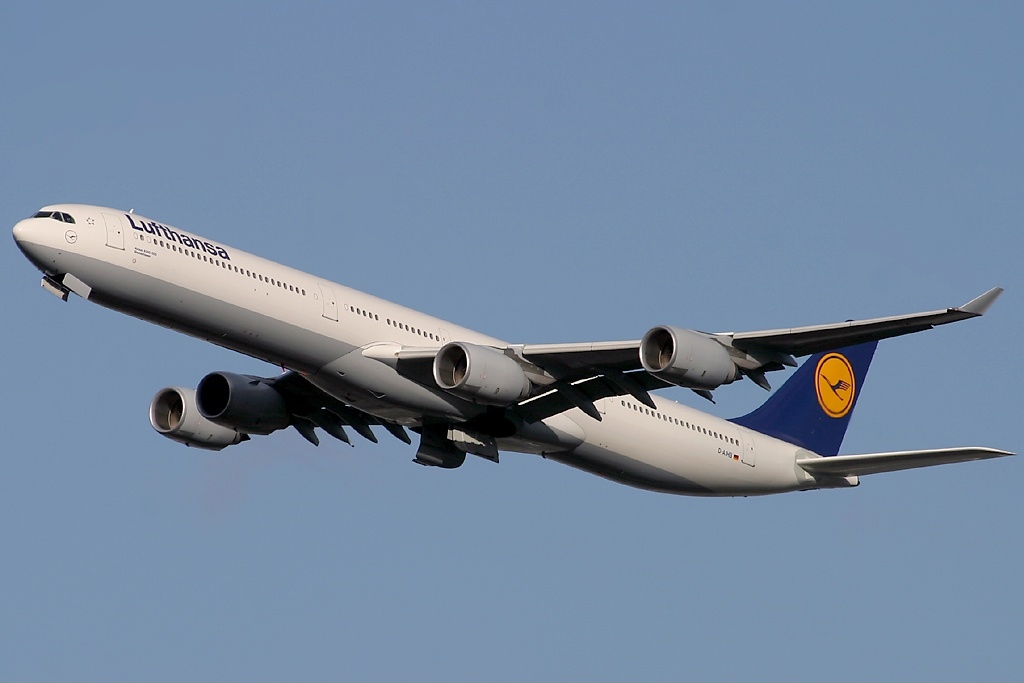
In the landscape of modern commercial aviation, few aircraft possess the majesty and technical grace of the Airbus A340-600. But for certain members of the Lufthansa fleet, the role of long-haul passenger transport merges with a vital scientific mission: the IAGOS project (In-service Aircraft for a Global Observing System). Through the installation of complex atmospheric sampling systems, this sky giant does more than just ply intercontinental routes; it acts as a high-precision meteorological probe, monitoring the health of our troposphere in real time.
✈️ Quick Facts & Performance
- Manufacturer: Airbus
- Model: A340-600
- Propulsion: 4x Rolls-Royce Trent 556
- Cruise Speed: Mach 0.83
- Service Ceiling: 41,100 ft
- Maximum Range: 14,450 km
History, Origin, and Design Philosophy
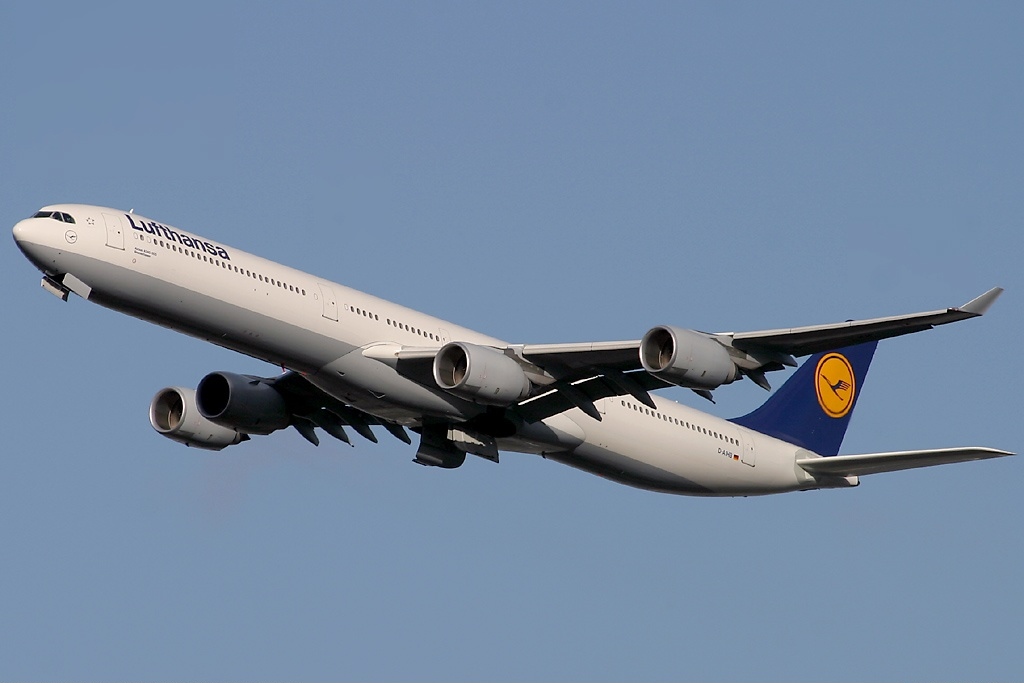
The Airbus A340-600 was born from the need to challenge the dominance of large long-haul jets with a four-engine configuration that ensured safety and redundancy on the most remote oceanic and polar routes. Its fuselage, one of the longest ever built, offers exceptional longitudinal stability, making it the ideal platform for integrating sensitive scientific instrumentation. The IAGOS project inherits the expertise of the MOZAIC and CARIBIC programs, bringing data collection to an unprecedented level of automation. The underlying philosophy is simple yet revolutionary: use the density of commercial flights to achieve spatial and temporal coverage of atmospheric data that no satellite or weather balloon could ever match. Lufthansa, a long-standing partner in this initiative, saw the A340-600 as the perfect carrier due to its ability to operate at altitudes where chemical processes between the troposphere and stratosphere are most active.
Aeronautical Engineering, Engines, and Aerodynamics
From an engineering perspective, integrating the IAGOS system onto an A340-600 requires a certified structural modification. A sampling probe is installed on the fuselage, usually in the lower forward section, designed to capture outside air without interference from engine exhaust or cabin emissions. The four Rolls-Royce Trent 556 engines are not just the muscles pushing the 368-ton maximum takeoff weight (MTOW); they also provide the electrical and pneumatic power needed to run the ozone, carbon monoxide, and water vapor sensors. The A340-600's aerodynamics, featuring a high-aspect-ratio wing with winglets, allow for extremely stable flight profiles, minimizing local turbulence that could alter the readings of the precision sensors located in the main avionics rack.
Life in the Cockpit: Operating Procedures and Pilots
For Lufthansa pilots commanding an aircraft equipped with IAGOS, the operational mission remains focused on flight safety, but with an added awareness. The system is designed to be fully autonomous: it activates at takeoff and shuts down after landing without human intervention. However, flight plan management takes on scientific relevance. Flying at FL370 or FL410 is not just a choice for fuel efficiency; it determines the atmospheric layer sampled. Pilots must constantly monitor the performance of the Trent 556 engines, ensuring thrust is optimized to maintain the ideal cruise altitude for data collection. The transition between the climb and cruise phases is when the sensors begin recording the most interesting chemical gradients, turning every flight into a dynamic atmospheric chemistry experiment.
Real Missions, Famous Routes, and Global Operational Challenges
Routes operated by Lufthansa's A340-600s, such as Frankfurt-Tokyo or Munich-Cape Town, cross regions crucial for climate study. While flying over Arctic regions or intertropical convergence zones, IAGOS sensors capture valuable data on greenhouse gases and pollutants traveling in jet streams. One of the main operational challenges is system maintenance: every few hundred flight hours, technicians must calibrate sensors and download high-resolution data. The logistics of coordinating these interventions with the aircraft's rigorous maintenance schedules require perfect synergy between ground engineers and climate scientists.
| Technical Specification | Official Data |
|---|---|
| Wingspan | 63.45 m |
| Length | 75.36 m |
| MTOW (Max Takeoff Weight) | 368,000 kg |
| Unit Thrust (Trent 556) | 56,000 lbf |
| Max Fuel Capacity | 195,520 L |
| Flight Crew | 2-3 Pilots |
The legacy of the Airbus A340-600 in the IAGOS project will remain etched in aviation history. As the world moves toward more efficient twin-engine aircraft, the contribution of this four-engine giant to climate science remains unmatched. It is proof that high-level aeronautical engineering can be more than just a means of transport; it can be a fundamental pillar for understanding our global environment.