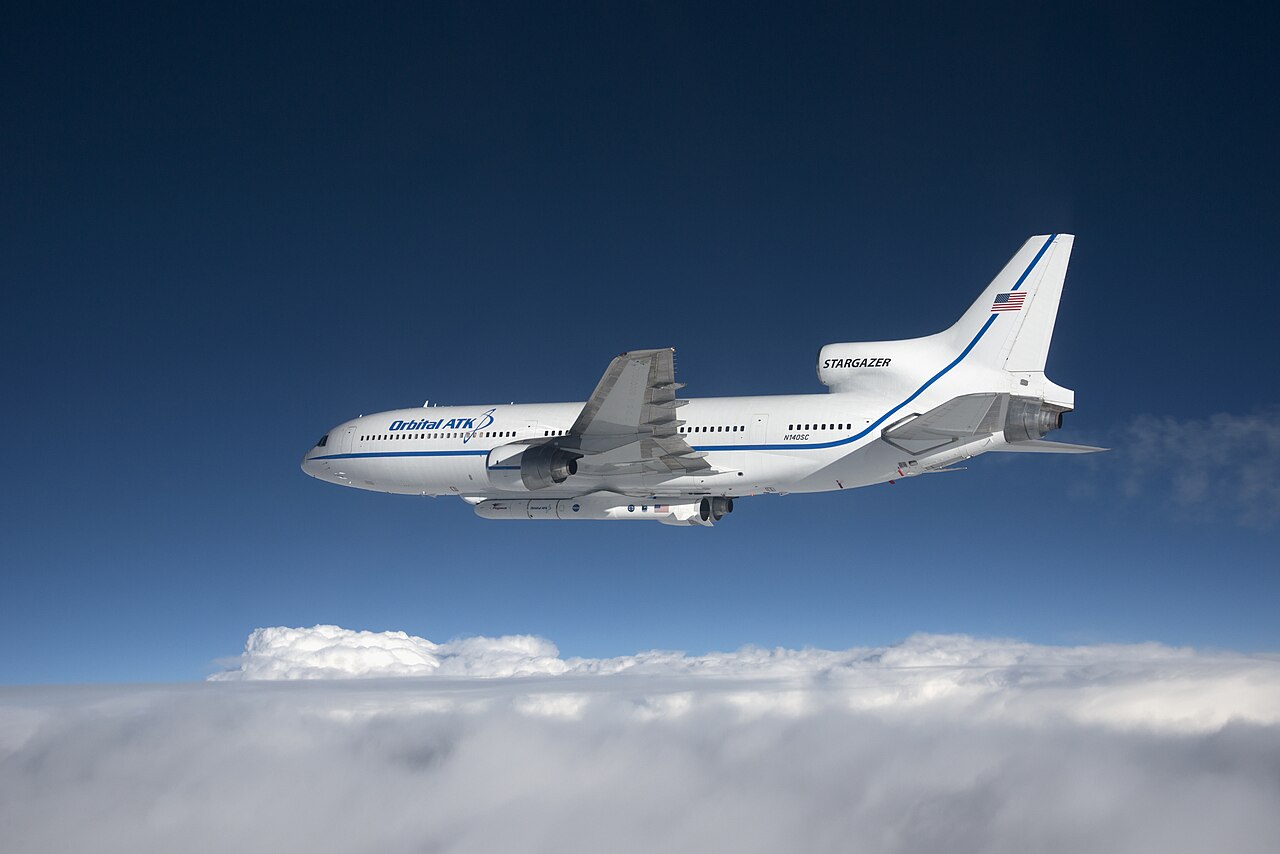
In the vast New Mexico desert, above the runways of SpacePort America, a silhouette stands out that defies traditional aviation conventions: the VMS Eve. It is not just a plane, but a flying cathedral of carbon fiber, designed to be the first step toward space.
✈️ Quick Facts & Performance
- Manufacturer: Scaled Composites
- Model: Model 348 WhiteKnightTwo
- Propulsion: 4x Pratt & Whitney Canada PW308 turbofans
- Speed: Mach 0.6
- Service Ceiling: 50,000 ft (15,000 m)
- Range: 2,500 nm
History, Genesis, and Design Philosophy
The VMS Eve, named after Sir Richard Branson’s mother, represents the pinnacle of Burt Rutan’s vision. Born from the experience of the original White Knight, which carried SpaceShipOne to win the Ansari X-Prize, the WhiteKnightTwo was redesigned from scratch to support large-scale commercial operations. The philosophy behind this aircraft is 'task separation': using efficient jet engines to overcome the densest part of the atmosphere, saving the precious propellant of the suborbital rocket for the final phase of the climb into the blackness of space.
Aeronautical Engineering, Engines, and Aerodynamics
The twin-fuselage architecture of VMS Eve is not just aesthetic; it is an engineering necessity. This configuration allows the VSS Unity spaceplane to be housed exactly at the wing's center, ensuring symmetrical weight distribution and a clean release. With a wingspan of 43 meters, entirely made of advanced composite materials, Eve possesses an exceptional strength-to-weight ratio. The four Pratt & Whitney PW308 engines, each capable of generating approximately 30 kN of thrust, provide the power needed to lift the integrated system to 50,000 feet. Redundancy is total: the aircraft can operate safely even with the loss of an engine during the critical ascent phase.
Life in the Cockpit: Operational Procedures
Flying the VMS Eve requires millimetric precision. Pilots sit in the right fuselage, while the left is configured for training or housing scientific payloads. During the ascent phase, the crew must constantly monitor the flight parameters of the attached VSS Unity. The 'Release' moment is the culmination of months of training: at 45,000 feet, after the countdown, the pilot activates the hydraulic release system. At that precise moment, VMS Eve experiences a sudden change in lift and attitude, requiring an immediate turn maneuver to clear the airspace for the spaceplane's rocket engine ignition.
Real Missions and Operational Challenges
Every flight over New Mexico is a choreographed dance with air traffic control and mission radars. The main challenge is not just altitude, but thermal management and high-altitude turbulence that can affect the stability of the coupled system. VMS Eve has shown extraordinary resilience, serving as a test platform for years before commercial flights. Its ability to operate like a conventional airliner while carrying a spacecraft makes it a unique piece in the history of aerospace engineering.
| Technical Specification | Official Data |
|---|---|
| Wingspan | 43 m (141 ft) |
| Length | 24 m (79 ft) |
| MTOW | Approx. 17,000 kg |
| Unit Thrust | 30.7 kN per engine |
| Crew | 2 Pilots |
| Primary Material | Carbon Composite |
In conclusion, VMS Eve is not just a means of transport, but the pillar upon which the entire architecture of private suborbital flight rests. As we look to the future of exploration, this white giant will continue to roam the skies, bringing humanity one step closer to the stars, one takeoff at a time.